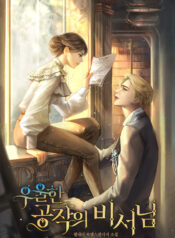
The news of Princess Helia Bailey and Duke Ruben Effenberg’s broken engagement spread rapidly across social circles. As it was an affair of others, people speculated freely about the reasons for the breakup, from trivial mistakes to outright infidelity. Fortunately, most rumors converged on one narrative: that the duke could not endure the princess’s notorious temperament.
Her abysmal reputation worked in her favor for once. Few people blamed the duke, with most offering their sympathy instead.
Helia felt a genuine sense of relief. At least Ruben would not be burdened with a tarnished reputation because of her. This was fortunate, especially considering the day the revolutionaries might rise openly.
That was enough. That was all that mattered.
And yet, she could not help but feel lost. She had planned to die. Her plans had hinged on her death to reach completion. But she had not died. No, she had been unable to die. Her plans had failed, and she had survived.
She had never envisioned a scenario in which she remained alive, so she had no plans for what came next.
The only future left for her seemed to be one where the revolution succeeded, and she faced the guillotine. To think that, after all her efforts, her end would be nothing more than that—a thought that left even her feeling bitter.
At the very least, she wanted to preserve a shred of dignity. She did not want to be dragged to the square like an animal. Was that asking too much? That was all she had ever wanted—just that much.
She let out a heavy sigh, one after another. Her sighs were like a whip to the servants of the Rose Palace, who lowered their heads even further, trying to avoid her gaze. The palace, as always, was shrouded in silence and a heavy atmosphere.
But the answer to her concerns came from an unexpected place—or perhaps it marked the beginning of even more significant troubles.
“What did you say?”
Helia blinked, stunned, as if she had misheard. She must have misunderstood. There was no way such a preposterous thing could happen.
But across from her, Xeroth reaffirmed the unbelievable news.
“A marriage proposal has come for you from Pteria. The suitor is none other than Crown Prince Cedric Prekin.”
Helia’s eyes widened in shock. She had broken off her engagement with Ruben less than a month ago. But the timing was irrelevant. What mattered was that he—Cedric Prekin—was the one proposing.
Why? How? Helia frowned openly, unable to hide her confusion.
Xeroth, unfazed by her reaction, pressed on with his own questions.
“Sister, have you had any interactions with Cedric Prekin?“
“How could I possibly…”
The sharp question was pointless. She had never met him—at least, not officially. Helia was about to deny it when she recalled their encounter at the masquerade ball.
“Could it be because of that incident?”
Helia let out a soft, contemplative sigh. Xeroth, noticing her silence, pushed again.
“Sister?”
“…No, I have never met him.”
There was no reason to lie, but the circumstances were problematic. The masquerade ball had been held in Bailey, and no one had mentioned Cedric’s presence afterward. That meant his visit to Bailey had been a secret known only to her.
If this became public knowledge, Cedric would face significant diplomatic backlash for visiting a foreign kingdom without notice. While Helia had no desire to protect him, she also did not want Xeroth to exploit this information for personal gain. After all, the masquerade ball’s unspoken rule was discretion.
“Is that true?“
“It is. He hasn’t even had much interaction with His Majesty, let alone someone like me, a mere princess. There’s no way he would have any association with me.“
Helia’s answer was plausible enough that Xeroth didn’t press further. Instead, he tapped the armrest of his chair as though in deep thought, then let out a heavy sigh.
“Sister, this is a very significant diplomatic matter.”
He fell silent again. As if she didn’t already know that, Helia stared at him with exasperation.
Even a five-year-old would understand how critical this was. An engagement with royalty from another nation differed entirely from marrying someone domestically. Moreover, the other party was the empire. For Bailey, a relatively young kingdom of only a few decades, this engagement was a golden opportunity to strengthen relations with Pteria.
The issue, however, lay in the connection involving Helia Bailey, who held a claim to the throne. What if she used the empire as leverage to seize Bailey for herself? That possibility momentarily crossed Xeroth’s mind.
‘Surely not.’
But as Xeroth observed Helia sitting across from him, he realized such concerns were unfounded. Yes, she was greedy, but her greed was confined to jewels and luxuries. She was clueless about politics or power.
“What does His Majesty wish for me to do?”
Helia asked innocently as though she had no ulterior motives.
Yes, it was a baseless worry. She had even been cooperative with him in the past. If she’d intended to seize Bailey, she would have acted before he ascended the throne. Even after he became king, she hadn’t seemed discontent, continuing her lavish, malevolent lifestyle with apparent satisfaction. Perhaps her recent broken engagement had caused her some distress, but with this proposal from the empire, things had turned in her favor. Xeroth convinced himself of this as he reassured his thoughts.
Of course, from Xeroth’s perspective, it would be safest for Helia to marry into one of Bailey’s noble families. However, the empire’s proposal was an unparalleled opportunity to foster friendly relations. Refusing it could result in unforeseen consequences.
“Of course, I want you to do as you wish.”
Xeroth avoided meeting her gaze, trying to conceal his ambitions as he answered. But he quickly added, as though anxious she might refuse, “However, there’s no need to rush your decision. Why not use this chance to visit the empire?”
Xeroth wanted to applaud himself for coming up with such an idea. He wasn’t sure why the crown prince of Pteria had proposed to Helia, but it was evident he had never truly encountered her. If he had, he would never have imagined proposing. Helia’s reputation preceded her. Once the prince met her, he would likely withdraw the proposal himself. That would give Bailey the upper hand to negotiate something in return. It was a win-win scenario.
“The empire?“
“Yes. You could meet the crown prince there in person and make your decision. In the meantime, we can observe how Pteria treats Bailey’s delegation. What do you think?”
For once, Xeroth’s idea was not half-bad. It would also give Helia time to consider the situation and gauge the empire’s intentions during her visit.
Helia responded as though she were deeply moved by his gracious suggestion.
“I’ll do as Your Majesty advises.”
Pleased with her submissive attitude, Xeroth nodded in satisfaction.
“I’ll order a delegation to be assembled immediately. I trust you’ll handle this well.”
Helia bowed deeply, as though honored, and left the audience chamber.
As she returned to the Rose Palace, Helia’s mind churned with thoughts of the empire’s true intentions.
“What could they possibly be plotting?”
No matter how she considered it, she couldn’t fathom why they would propose to her. She was merely a disgraced princess from a small kingdom whose engagement had been annulled only a month prior. Eligible young ladies from noble families who could aspire to such a marriage were abundant.
Furthermore, this was a proposal from the crown prince. Marrying him would make her the future empress. What could motivate them to choose her for such a role? Even internationally, her reputation was abysmal. Indeed, the imperial family was aware of that.
The only plausible explanation she could think of was that the empire intended to use this engagement to absorb Bailey. But why Bailey, of all places? Countless other nations were eager to forge alliances with the empire through marriage, many more powerful and influential.
Ultimately, she concluded she would only learn the truth by meeting them in person. Clenching her hands tightly, she resolved to approach this with utmost caution. No matter their motives, she would remain vigilant. She had long been accustomed to viewing anyone approaching her as an enemy.
YOU MAY ALSO LIKE