Although it was only the start of winter, the air was cold enough to freeze everything solid. Low-hanging clouds swallowed the sun, turning the sky a dull, ashen grey. A sharp wind swept down from the north, slipping through the tightly packed crowd, tugging at hems and scattering layers of cloth in its wake. The cold seeped deep into people’s bones, but despite clutching their coats more tightly, not a single person moved.
From early morning, the central square had filled up until there was no space left to stand. An oppressive atmosphere hung over the square, and the closer one got to the outskirts, the louder the murmurs became. Some spoke eagerly, remarking that the merciless punishment to be carried out today suited the lifeless cold all too well; their faces were flushed with excitement.
Their eyes revealed emotions far stronger than fear: curiosity, revulsion, relief, the comforting thought that they would not be the ones to climb the pyre, and barely concealed anticipation.
“They say she’s beautiful enough to steal your soul. We’ll finally see for ourselves today.”
“Well, then she must be a witch. Someone like her would dare to bewitch His Majesty and plot his downfall.”
Selonia was known as the Emperor’s lover or mistress, a name whispered even among the Empire’s common folk. The story of an illegitimate daughter of a minor nobleman who rose to stand at the Emperor’s side was enough to pique anyone’s curiosity.
Today, those who once admired her and dreamed of becoming a second Selonia, those who sneered that she never became Empress or even an imperial fiancée, and those who pitied her as a naïve girl used and discarded by the Emperor, all shared the same thought.
‘Selonia Brienne was a witch.’
The declaration came directly from the bishop of the Grand Cathedral, so there could be no doubt. Nevertheless, it was said that His Majesty the Emperor had been unable to tear himself away from the witch. Rather than imprisoning her, he permitted her to remain in a lavish palace until the trial concluded. Just how powerful her sorcery must have been to ensnare a figure believed to be under divine protection! She was undoubtedly a legendary witch.
“Still, the gods haven’t abandoned the Ardian Empire.”
“That’s right. Just imagine if that witch had actually become Empress.”
Women who stole the life force of innocent people in order to amass magical power were called witches. However, not everyone who wielded magic was a witch. After all, the Ministry of Magic did employ female mages. The difference lay in the type of magic flowing through their bodies.
‘Women cannot possess magic.’
This had been accepted as an axiom ever since Ardian achieved imperial status. As a result, female mages learnt magic through mana stones, which are vessels that can contain magical power. This was also why most women in the Ministry of Magic worked as researchers. Without an innate vessel within their bodies to store mana, they found it difficult to wield magic directly in the field.
Therefore, for a woman to possess magic was interpreted as meaning that something she had not been born with had been artificially implanted into her. The Grand Cathedral proclaimed that the only way to generate magic artificially was to convert human life force into mana, branding anyone who engaged in such acts as a heretic. Witches were said to be the descendants of the evil god Ranesh, and as they were no longer considered human, their deaths went unmourned.
“…It looks like it’s about to begin.”
As the execution ground became busier and busier, someone in the front row murmured softly. Those gathered to witness the witch’s death fell silent, fearful of missing anything, and fixed their gazes straight ahead.
In the center of the square, the pyre had already been erected. The ground beneath it had been reinforced with a mixture of water, mud, stone and sand to prevent the flames from spreading. At its heart stood a thick wooden stake. Around it, layers of thoroughly dried logs had been stacked high to ensure the fire would take hold.
Large, well-seasoned logs formed the base. The middle layer was made up of resin-coated straw, which had been wedged in place to help the flames catch. On top of these, strips of oil-soaked cloth had been draped over the wood. This arrangement showed the Grand Cathedral’s determination to cleanse the witch of her original sin by burning her.
Soon, holy knights encircled the pyre, standing guard. In front of the execution ground, imperial knights stood tightly packed to prevent any unrest among the crowd. When several priests climbed onto the pyre and tipped the buckets they were carrying, an unknown black liquid poured down over the stacked logs.
Was the execution by fire about to begin?
The icy silence shattered, and whispers rippled through the crowd once more. What would the witch look like? Even when someone was found guilty of witchcraft, not everyone was burned at the stake. If executions were held daily in the central square, it would have been a calamity in itself. Only those deemed exceptionally wicked or dangerously powerful were put to death by fire. Most were confined to the Grand Cathedral’s underground prisons for life instead.
As it was such a rare event, people from across the Empire would flock to witness a witch’s execution whenever a pyre was raised. Some denounced it as an unbearably cruel punishment, while others could not bear to see a person burned alive. However, amid the frenzy of the masses, such quiet objections were swiftly silenced and never gained strength.
Each witch brought to execution looked different. Some hurled curses at their executioners until their voices broke. Others wept and begged until the very end, insisting that they were not witches and pleading for mercy. What would this one be like?
Just as the low murmur of the crowd was about to swell with feverish anticipation, the clamor shattered instantly, like thin ice cracking, at the sound of clanking chains.
“The witch is coming!”
In response to a cry from someone in the front row, the crowd gathered to the right of the pyre slowly parted. Between them, two holy knights in white armor dragged a woman towards the stake. Chains trailed from her ankles, so thin that they seemed to cling to bare bone, and she struggled to force herself forward.
Selonia lifted her gaze towards the overcast sky, remaining silent as though it mirrored her own state of mind. With every movement, the coarse rope binding her wrists scraped her skin, causing blood to seep from the raw wounds it had created. The shackles around her ankles had cut into her flesh so often that hardly any uninjured skin remained. The only protection she had been given against the biting wind was the thin, white cotton garment issued by the Grand Cathedral. The cold cut so deeply that it felt as though it were piercing her bones — yet at some point, even that sensation had dulled, as if her body itself had begun to shut down.
On the day she learned of Alix’s betrayal, she lost consciousness. When she awoke, holy knights stormed into the room. She was then forcibly undressed, gagged, and dragged away. They told her that the execution would take place in two days’ time, but she spent the rest of her life in a sleep-like state.
Had she known it would end like this, she would have raked her nails across Alix’s face that night. Once she had regained her senses and pieced together the full extent of Alix’s atrocities, she hurled curses and hatred at the Emperor and the Grand Cathedral. However, with a gag in her mouth, none of it ever reached them. Regret, arriving so late, was meaningless.
“Move. Don’t dawdle.”
Though she was so frail that she could have collapsed and died at any moment, the Holy Knights shoved her forward roughly, treating her like an inconvenience. Her body swayed, teetering on the brink of collapse, but she refused to kneel. Gritting her teeth, Selonia forced herself onwards, drawing on her last remaining strength.
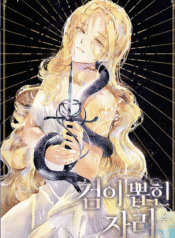
They dragged her to the central stake. Standing before it, towering half a head taller than an adult man, she lowered her gaze in silence. The cold wind tugged at her pale pink hair, causing it to bow and flutter around her face.
“That woman… is the witch?”
Those who had come ready to hurl accusations faltered and fell silent for a moment. The witch standing before them was far too slender and fragile.
Her limbs, reddened by the cutting wind, looked so thin that they appeared ready to snap. Her long, delicate neck appeared fragile enough to break under a firm grip. Her pale, drawn face bore the marks of illness and exhaustion, yet this did nothing to diminish her beauty.
Her luxuriant pink hair was so beautiful that it seemed as though it might scatter into petals at any moment, as if spring had arrived in the heart of winter. The simple white cotton dress made her appear even more angelic. When her clear, lake-blue eyes met theirs, some people flinched, their ears flushing red as they hastily looked away.
It was easy to see why Emperor Alix had fallen so deeply in love with her.
“Selonia Brienne.”
Perhaps sensing the crowd’s wavering mood, a man stepped out from behind the pyre and called her name in a booming voice. His words were infused with divine authority, carrying such weight that every gaze was drawn to him at once.
Holding a holy scripture in one hand, the man — with his bulging belly and sagging cheeks in stark contrast to his sharp, piercing eyes — fixed his stare on her. He was Ludvig, the Pope of the Grand Cathedral.
YOU MAY ALSO LIKE